
A proven investment framework, refined through real-world experience.
A practical blueprint to guide your investing journey.
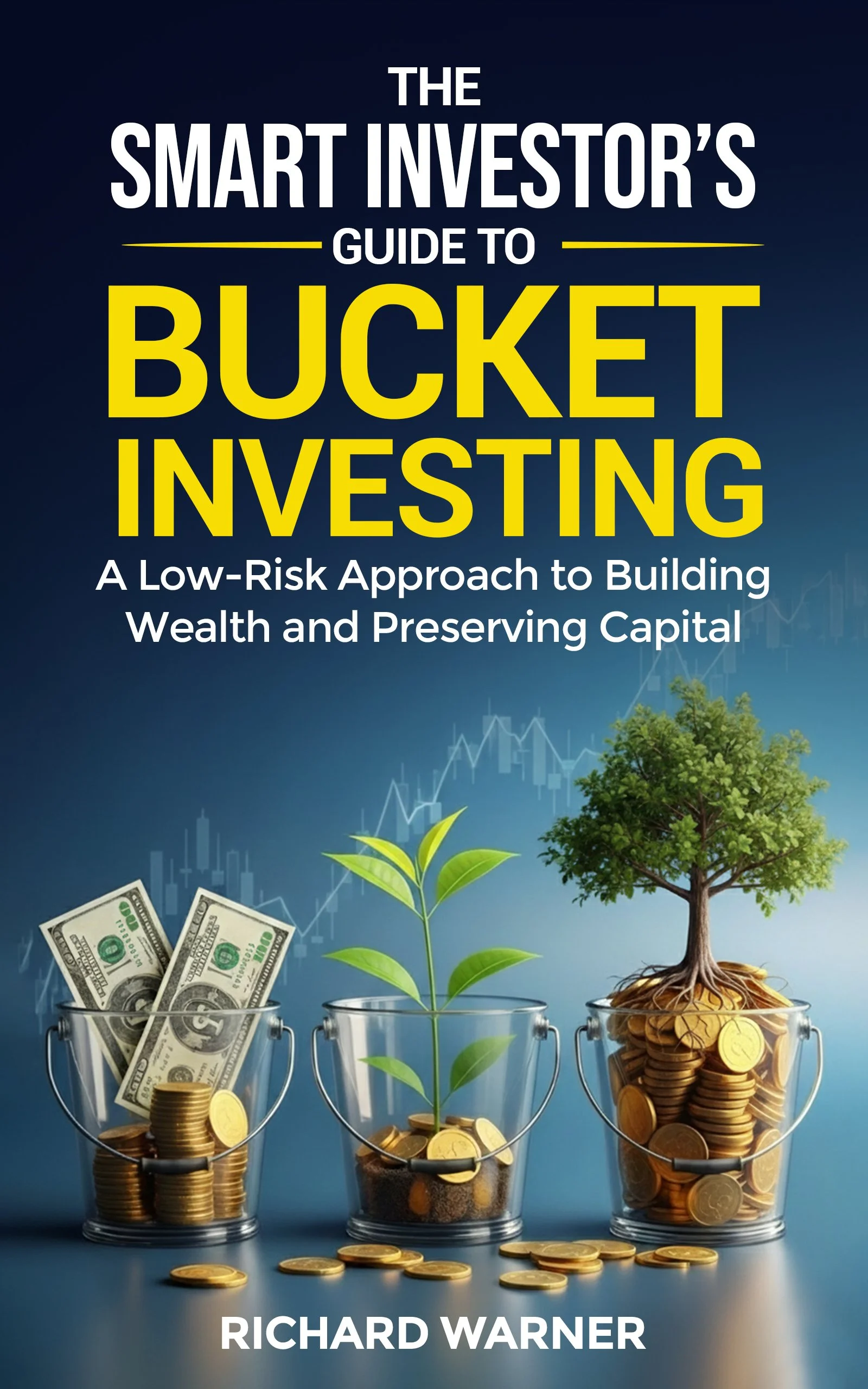
Recommended Books
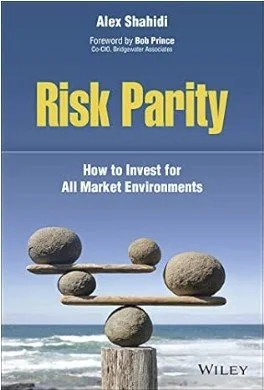
Risky Parity: How to Invest for All Market Environments by Alex Shahedi
In Risk Parity: How to Invest for All Market Environments, Alex Shahidi provides a strategic roadmap for constructing a balanced investment portfolio that aims to deliver equity-like returns with significantly lower volatility. The book challenges the traditional 60/40 model by advocating for a risk-balanced allocation across four key asset classes: equities, commodities, Treasury bonds, and Treasury Inflation-Protected Securities (TIPS). By focusing on how these assets respond to different economic drivers like growth and inflation, Shahidi shows how investors can build a resilient portfolio that performs consistently regardless of market conditions.
Key Takeaways:
Balance Risk, Not Just Dollars: True diversification is achieved by equalizing the risk contribution of each asset class rather than simply splitting capital, which often leaves traditional portfolios overly exposed to equity volatility.
Hedge Against Economic Surprises: A robust portfolio must include a diverse mix of assets that perform well in varying environments—specifically growth and inflation surprises—to ensure stability through any market cycle.
Preparation Over Prediction: Rather than attempting to forecast future market movements, investors should focus on building a structurally sound portfolio designed to weather any economic regime without the need for tactical timing.
Quote Highlight: "The ultimate goal of a risk parity portfolio is to earn attractive equity-like returns while taking less risk than equities."
The Bogleheads Guide to Investing by Lindauer, Larimore, and Michael LeBoeuf
A warm, witty guide to low-cost, long-term investing for everyday people. This DIY classic aligns beautifully with bucket investing’s emphasis on simplicity, cost control, and behavioral discipline. This book is perfect for new investors and retirees seeking a reassuring, evidence-based approach to managing buckets.
Key Takeaways:
Champions low-cost index funds and passive strategies
Reinforces emotional discipline and goal-based planning
Offers clear asset allocation guidance for each life stage
Quote Highlight: "The Boglehead Way emphasizes what works—not what sells."
Pioneering Portfolio Management by David Swensen
Yale’s endowment wizard reveals the art and science of asset allocation.
Though written for institutional fund managers, Swensen’s insights on diversification, risk, and long-term strategy are gold for bucket investors modeling multi-decade drawdowns.
Key Takeaways:
Asset allocation drives returns more than security selection
Advocates unconventional assets (private equity, real estate)
Offers a rigorous framework for risk-adjusted rebalancing
Quote Highlight: "Asset allocation is the primary driver of investment returns.
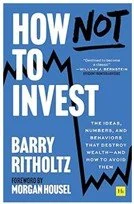
How Not to Invest by Barry Ritholz
A masterclass in avoiding the costly mistakes that derail most investors. Instead of promising secret formulas, Ritholtz shows how to sidestep bad advice, behavioral traps, and false confidence. Ideal for investors seeking guardrails against self-sabotage.
Key Takeaways:
Categorizes pitfalls into Bad Ideas, Bad Numbers, and Bad Behavior
Emphasizes discipline, patience, and humility over speculation
Teaches investors to “lose less” as the surest path to compounding
Quote Highlight: “The easiest way to make money is to avoid losing it.”
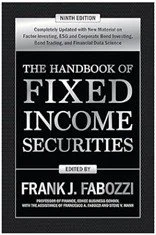
The Handbook of Fixed Income Securities by Frank Fabozzi
The definitive reference on bonds, credit markets, and structured products. Fabozzi’s handbook is the gold standard for anyone serious about fixed income trading and investing. Written for advanced bond fund managers, traders, and students of finance.
Key Takeaways:
Comprehensive coverage of bonds, derivatives, and structured finance
Explains issuer diversity: governments, corporates, municipals
Practical frameworks for risk, valuation, and portfolio construction
Quote Highlight: “Briefly, money market instruments are low-risk, highly liquid, short-term, unsecured IOUs issued by banks, nonfinancial corporations, the U.S.Treasury, various agencies of government, and state and local governments.”
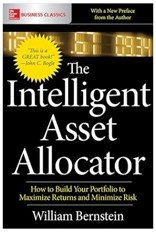
The Intelligent Asset Allocator by William Bernstein
A clear, evidence-based guide to building diversified portfolios. Bernstein distills modern portfolio theory into actionable steps for everyday investors. This book is written for DIY investors seeking a rational, data-driven framework.
Key Takeaways:
Asset allocation outweighs stock-picking in long-term success
Uses historical data to show risk/reward trade-offs
Advocates disciplined rebalancing and global diversification
Quote Highlight: “Diversification is the investor’s only free lunch.”
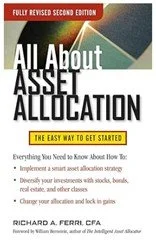
All About Asset Allocation by Richard Ferri
A practical guide that makes asset allocation accessible to everyday investors. Ferri strips away complexity, showing that disciplined diversification and low costs matter far more than market timing or stock-picking. The book is ideal for individual investors seeking a straightforward, actionable framework without jargon.
Key Takeaways:
Asset allocation is the single biggest driver of long-term returns
Advocates simple, diversified portfolios using index funds and ETFs
Provides sample allocations for different life stages and risk tolerances
Emphasizes discipline, rebalancing, and keeping costs low
Quote Highlight: “Trying to outwit the market is a bad gamble. If you’re serious about investing for the long run, you need a no-nonsense, businesslike approach to your portfolio.”
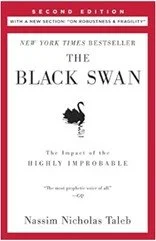
The Black Swan by Nassim Nicholas Taleb
Explores rare, unpredictable events that reshape history and markets. Taleb’s most famous work challenges our reliance on models and forecasts. This book is written for strategists, policymakers, and investors confronting uncertainty.
Key Takeaways:
Black Swans are improbable but massively impactful
Humans create false narratives after the fact
Robustness requires preparing for the unexpected
Quote Highlight: “I can find confirmation for just about anything, the way a skilled London cabbie can find traffic to increase the fare, even on a holiday.”
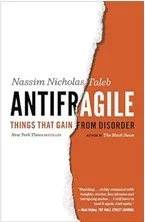
AntiFragile by Nassim Nicholas Taleb
A bold philosophy: some systems thrive on volatility and shocks. Taleb reframes risk, showing how to benefit from uncertainty rather than fear itself. This book is for contrarian thinkers, iconoclasts, risk managers, investors, and entrepreneurs.
Key Takeaways:
Distinguishes fragile, robust, and antifragile systems
Advocates “barbell strategies” balancing safety and risk
Critiques overconfidence in models and forecasts
Quote Highlight: “For antifragility is the combination of aggressiveness plus paranoia – your downside, protect yourself from extreme harm, and let the upside, the positive Black Swans, take care of itself.”
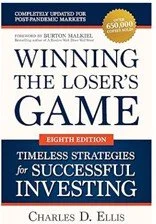
Winning the Loser’s Game by Charles Ellis
A timeless investing classic that argues individual investors win not by beating the market, but by minimizing mistakes and keeping costs low. Ellis reframes investing as a “loser’s game”—like amateur tennis, where success comes from avoiding unforced errors rather than hitting spectacular winners. His advocacy for indexing and discipline has influenced generations of investors. Great for individual investors, advisors, and committees seeking clarity on why indexing and discipline work.
Key Takeaways:
Active management is increasingly a losing battle against institutions
Index funds and low-cost strategies consistently outperform over time
Investor behavior (discipline, patience, rebalancing) matters more than forecasts
Long-term policy and simplicity trump short-term speculation
Quote Highlight: “In investing, the great advantage is not in winning big, but in not losing.”
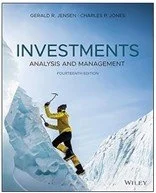
Investments by Gerald Jensen & Charles Jones
A comprehensive, balanced introduction to investment theory and practice. Jensen and Jones blend fundamental concepts with behavioral finance to provide a solid understanding of global markets. This textbook is ideal for students and professionals alike seeking a structured foundation in investing.
Key Takeaways:
Covers securities, markets, and portfolio mechanics
Integrates ethics, globalization, and ETFs
Emphasizes risk/return trade-offs and problem-solving
Quote Highlight: “Every investor must make decisions—if you don’t, they’ll be made for you.”
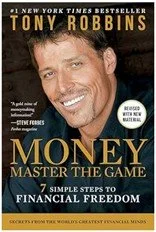
Money: Master the Game by Tony Robbins
Robbins distills billionaire wisdom into seven steps to financial freedom. Combines motivational energy with practical strategies from Ray Dalio, John Bogle, Warren Buffett, and others. This book is ideal for everyday investors seeking empowerment and clarity.
Key Takeaways:
Advocates the “3-bucket” strategy for security, growth, and dreams
Explains compounding and low-cost indexing
Stresses mindset, discipline, and generosity
Includes a discussion of Ray Dalio’s famous risk parity All Seasons portfolio
Quote Highlight: “The secret to wealth is simple: do more for others than anyone else does.”
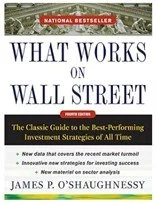
What Works on Wall Street by James O’Shaughnessy
A data-driven analysis of which investment strategies consistently succeed. O’Shaughnessy tests decades of market data to separate myth from reality. This book is ideal for quant-minded investors and advisors seeking evidence-based strategies.
Key Takeaways:
Value and momentum factors outperform over time
Systematic, rules-based investing beats gut instinct
Includes model portfolios for practical application
Quote Highlight: “Some strategies do produce consistently strong results while others underperform.”
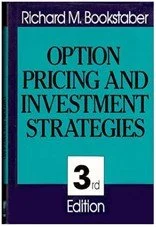
Option Pricing and Investment Strategies by Richard Bookstaber
A rigorous yet practical guide to options theory and real-world trading strategies. Bookstaber bridges pricing models with trading applications. This book is for quantitative traders and investors seeking a solid understanding of volatility and options pricing.
Key Takeaways:
· Explains option properties, valuation, and volatility
Explores alternative methods to standard deviation for calculating volatility (extreme high/low approach, e.g.)
Covers hedging, arbitrage, and dynamic replication
Shows how to exploit mispricing and embedded options
Quote Highlight: “Options are not just instruments—they are strategies in themselves.”
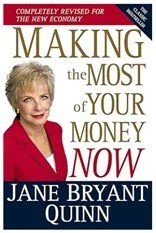
Making the Most of Your Money by Jane Bryant Quinn
A comprehensive, plainspoken guide to personal finance that covers every stage of life, from first job to retirement. Quinn’s classic has been fully updated for the “new economy,” offering practical, no-nonsense advice on budgeting, investing, debt, housing, insurance, and retirement planning. It’s often called the single most complete personal finance book available. This is one of the most reliable and trustworthy books I’ve ever read on personal financial management.
Key Takeaways:
Emphasizes mindful spending, budgeting, and automatic saving
Explains credit, mortgages, insurance, and taxes in accessible terms
Offers strategies for investing through mutual funds and retirement accounts
Provides guidance for major life transitions: marriage, divorce, college, retirement
Quote Highlight: “Getting your financial life on track and keeping it there—nothing is more important to your family and you.”
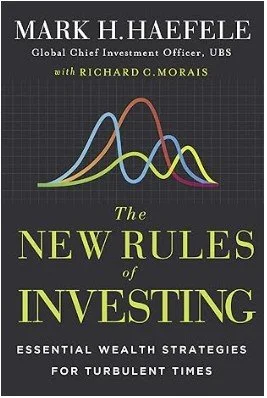
The New Rules of Investing by Mark Haefele
A modern playbook for navigating wealth strategy in volatile times. Haefele, UBS CIO, reframes traditional investing with global case studies and client-tested strategies. Especially useful for bucket investors adapting to demographic shifts and tech-driven market changes. Ideal for investors seeking a forward-looking framework for bucket allocation in turbulent markets.
Key Takeaways:
Emphasizes global diversification and thematic investing
Advocates dynamic rebalancing across time horizons
Offers psychological framing for long-term discipline
Quote Highlight: "Stock picking and Buffett-style investing are the tools of a bygone era."